How to Sell a Tenant-Occupied Home in Pennsylvania
Selling a tenant-occupied investment property may raise questions about whether you can list a home with an active lease in place, whether the tenant needs to vacate first and whether a sale terminates the lease you signed with them.
These concerns can stall more landlords than any other stage of the process. Pennsylvania law treats tenant-occupied sales differently than vacant ones, with specific requirements governing notice, showings and the existing lease.
Can You Sell a Tenant-Occupied Home?
Yes. A tenant living in the property does not prevent you from listing the home, accepting an offer or closing the sale. Selling a house with tenants in PA is a simple legal transaction once you understand the framework that governs it.
The Pennsylvania Landlord-Tenant Act of 1951 establishes the lease-survives-sale guidelines. When a property changes hands, the existing lease transfers to the new owner. The transaction does not terminate the tenant's right to occupy the property, and you cannot evict a tenant if you want to sell.
Under Section 104 of the act, anyone who acquires title to real property by purchase assumes the same duties and rights as the prior owner, including the existing lease. The state also does not grant residential tenants a statutory right of first refusal, so your tenant cannot purchase the property before you sell to someone else, unless the lease specifically grants that right.
What Pennsylvania Law Says About Your Tenant's Rights
Before listing your property, you should understand the tenant rights in PA that shape your timeline and obligations. Pennsylvania landlord-tenant law
covers three areas that matter most during a sale.
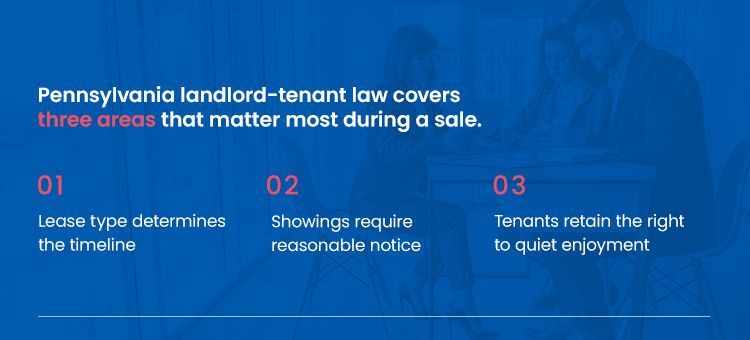
- Lease type determines the timeline: A fixed-term lease runs to its expiration date regardless of the sale, and the buyer inherits the full remaining term at the same rent and conditions. Month-to-month tenants may be given written notice to vacate under Section 501 of the Act, depending on the length of tenancy.
- Showings require reasonable notice: State law requires reasonable advance notice before entering a rental unit. Though there is no specific requirement, 24 hours is the widely accepted standard, unless your lease requires more.
- Tenants retain the right to quiet enjoyment: Your tenant keeps the right to live undisturbed in the property throughout the sale, limiting how and when you can schedule access.
Notice periods above apply to vacating, not to notifying a tenant of your intent to sell. These are legally distinct, and confusing them is a frequent misstep. Consult an attorney to confirm requirements for your situation, and review landlord and tenant rights in Pennsylvania for more context.
Your Options for Selling a Tenant-Occupied Property in PA
Once you understand the legal framework, it's time to choose a strategy that fits your goals. Landlords selling rental property with tenants generally have three paths available.
1. Sell With the Tenant in Place
Selling with the tenant in place is generally the fastest path to closing. Because there's no vacancy period, rental income will continue uninterrupted. Investors often prefer occupied properties where a tenant already generates cash flow. A narrower pool of buyers can affect your final sale price.
Prepare a complete tenant package for prospective buyers, including the lease, rent roll, deposit details, maintenance history and any side agreements. A thorough package used in tenant-occupied property sales builds buyer confidence and can speed up closing.
2. Wait for the Lease to Expire
If maximizing your buyer pool matters more than speed, waiting for the lease to end is the cleanest option. Build your listing and closing timeline around the lease expiration date rather than your ideal sale date.
3. Negotiate a Voluntary Move-Out
Some landlords reach a written agreement with their tenant to vacate before the lease ends, sometimes involving financial consideration for an early move-out. This arrangement can work well when both parties are motivated, but you must formalize it in writing. An attorney experienced in landlord-tenant matters can draft detailed terms that let you avoid complications.
Your Legal Obligations as the Selling Landlord
Understanding tenant rights is only half the equation. The tenant-occupied home sale process also includes compliance steps to protect you from liability after closing.
Notice Requirements by Lease Type
Before you list the property, schedule a showing or speak with a buyer, confirm your lease type and calculate your exact notice obligations using the requirements outlined above. Written notice, properly served and documented, is nonnegotiable at every stage, regardless of which timeline applies to your situation.
Managing Showings the Right Way
Scheduling showings in an occupied property takes more coordination than in a vacant one. Give at least 24 hours' written notice for each visit, keep a written record of every notification and coordinate timing to minimize disruption to your tenant.
If a tenant becomes uncooperative, you have limited legal options, since you cannot force entry unless there is a genuine emergency. An established tenant relationship is paramount during a sale. A property manager who already has that relationship can often resolve scheduling friction more easily than a seller managing it alone for the first time.
Handling the Security Deposit at Closing
The security deposit is one of the most frequently mishandled steps in a tenant-occupied sale, and it carries post-closing liability for former landlords. At closing, you must either transfer the deposit to the new owner and notify the tenant in writing of the new holder's name and address or return the deposit directly to the tenant if they aren't staying.
Under Pennsylvania security deposit rules, this transfer or return must happen within 30 days of the transfer of ownership. Because rules around permissible deductions carry real legal risk, consult legal counsel before finalizing this step and build it into your closing checklist alongside broader tenant relations services planning.
Work With Harrisburg Property Management Group

Considering tenant rights when selling a property in PA may be more complex than in a standard sale, including notice requirements, security deposit transfers and buyer expectations regarding inherited leases. A single misstep can delay closing or create liability well after the transaction concludes.
Harrisburg Property Management Group has managed hundreds of properties throughout Harrisburg, Carlisle and the surrounding areas since our founding in 2011. Our team offers Harrisburg property management services and real estate brokerage services, and we work to understand the tenant, home and market before scheduling showings.
Contact Harrisburg Property Management Group to explore property sales services in Central Pennsylvania and let us help you maximize your investment.