How Do I Find and Keep Good Tenants?

How to Find and Keep Good Tenants
What’s one thing better than a good tenant? A good long-term tenant. As a rental property owner in the Harrisburg and Mechanicsburg, PA area, you know finding the right tenant and keeping them can be a challenge — but it doesn’t have to be.
How to find the right tenants and keep them comes from following basic property management principles, like credit checks and lease renewal incentives.
Your rental property is a business venture. To maintain a successful rental property business, you have to keep your premises occupied. You also need to have cash flow, and these two principles apply whether you have one revenue property or several. The same selection and retention strategies apply to large and small rental property owners.
To have a solid cash flow, you need reliable tenants who pay on time and in full, month after month. High tenant turnover interrupts your cash flow, threatens your businesses’ sustainability and can kill your bottom line. It also costs you time and money.
Recognizing the value of good tenants is the mark of a savvy and experienced landlord. When a vacancy happens, you need to know how to find a renter fast to keep revenue flowing and your overheads looked after.
Let’s look at proven how-to strategies for finding and keeping good tenants that have worked for rental property owners in the Harrisburg area.
How to Find Good Tenants
The unfortunate reality in the rental property management business is that finding bad tenants is easier than identifying the good ones. That’s not to say that excellent, dependable and long-term renters aren’t out there. It’s just that you have to be diligent to attract and keep them as a tenant.
So, how do you attract the good ones?
Follow a Renter Vetting Process
The best way to properly vet or qualify a prospective tenant is with an organized system that ensures you don’t miss, overlook or skip any step. Your renter audience, or demographic, includes dependable, responsible people with a reliable source of income, or other financial means, to meet their financial obligations.
Have a checklist and professional application forms to begin vetting. An application and checklist make it so much easier to follow a thorough vetting process. It also conveys to an applicant that you’re professional, and it sets the tone for your landlord-tenant relationship from the start.
Vetting begins with obtaining basic personal information. Make sure it includes:
- Full name of applicant or applicants
- Social Security Number and birthdate
- Current address and preferred contact information
- Current employer and contact details
- Personal financial institute
- Current monthly income
- Current payments to calculate a debt-to-service ratio
- Personal references outside of family
- Current and past employment references
- Current and past credit references
- Statement authorizing reference and credit inquiries
Prospective renters will be familiar with these types of requests. If they show hesitation to answer or leave a part blank, it could be a red flag, but offer to explain the form or answer any of their questions before making your assessment.

Abide by Fair Housing Laws
As a rental property owner in the Harrisburg and Mechanicsburg PA area, you’re bound by the Fair Housing Act, which prohibits discrimination against housing applicants. Unless you’re aware of these human rights principles, finding tenants without an agent might be risky.
Pennsylvania’s Fair Housing Act states you cannot deny a tenant for the following reasons:
- Nationality
- Ancestry
- Race
- Religion
- Disability
- Familial status
- Sex
- Guide or support animal use
Several valid and legal reasons for rejecting an applicant exist and tend to include financial reasons, such as an insufficient income or a low credit rating. The potential tenant’s references (or lack thereof) can also result in denying their housing application.
Invest in Marketing
Use proven marketing techniques to find good tenants. Marketing is a broad term that describes how you’re positioning your property so qualified tenants can find it. Here are the best marketing moves we’ve seen work for landlords in Harrisburg:
- Online classified ads like Craigslist. Make sure you have a professionally written description and photographs. You’re making a first impression with an online pitch, and you’ll be judged by the people you’re trying to attract.
- Exterior signs on the actual property. Again, make sure these are professionally made. Poor signs suggest poor management, and that’s not the image you want to market.
- Dedicated websites are highly effective, especially when used with the right search engine optimization. They may not be worth the expense for a single property, but they do provide returns for multiple leases.
- Word-of-mouth from satisfied clients or knowledgeable property managers is an invaluable social currency. People trust other people, like friends and family, and their reviews more than anything.
- Property management services are excellent sources to find good tenants. The property management groups know the local area and have an existing network beyond what you can do alone. Property managers also have legal sources to help draft leases, and they know how to collect rent on time and ensure regular maintenance.

Set the Right Price
Filling rental vacancies is dependent on supply and demand, as well as being competitive with current market values for similar properties. Smart renters will be aware of proper property value.
Setting your price above fair market value deters decent tenants. It may also prevent them from even inquiring about whether or not the price is negotiable. However, too low of a price can have the opposite effect. You may be flooded with applicants who are expecting a deal or want a low-commitment housing option.
Knowing where to set your price point will have a significant impact on what tenants you attract. If you’re unsure of your price point, it’s best to contact a professional for advice specific to your property, location & neighborhood.
Show the Property in Good Condition
“What you see is what you get” is often true with rental properties. If your place isn’t showing its best, a good prospect’s impression will probably be negative. Good renters will “judge a book by its cover” with your rental property, because they’re going to seek the same standards in their home that they exemplify themselves.
Spending the time to prepare your property for a great showing pays off. You might have to repaint or at least have the floors professionally cleaned, depending on your property’s condition. Cleanliness is essential, and that goes for the appliances as well as the bathroom fixtures. All demonstrate a good intention and maintenance on your part.
Good tenants will keep your property clean and in good repair. A positive first impression goes a long way toward a long-lasting relationship. That’s what you want in a good tenant. Knowing how to keep good tenants is the second part of a successful rental property business.
How to Keep Good Tenants
The landlord-tenant relationship is a two-way street. Tenants and landlords continue to review one another and reevaluate their arrangement, long after they’ve signed a lease agreement.
How you keep a good tenant is giving them a reason to stay, by treating them well, making your rental property a good place to live, and offering other kinds of incentives.
Be a Model Landlord
Potential tenants evaluate more than your property, prices and lease details — they evaluate you. You’re a part of the package when they sign a lease agreement, and they rely on you for answers and services.
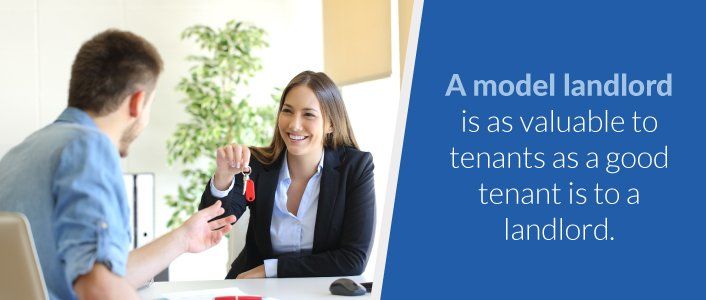
A model landlord is as valuable to tenants as a good tenant is to a landlord. Follow the golden rule, and you’ll keep your great and reliable tenants. Offer them a friendly face and greeting if and when you see them.
Notices, such as birthday or holiday cards, are also a wonderful way to engage your tenants and build a working relationship with them. Keep in mind, however, not all of your tenants may celebrate the holidays.
Great landlords also develop ways to involve their tenants in the local community, such as Harrisburg, or the rental property’s community, like an apartment complex. Weekly game nights at the property or the promotion of a local event help the tenant become a part of the community.
Tenants who are active in their community, whether a city or property complex, often build friendships and a connection to the area, which encourages them to stay with you — their one-of-a-kind landlord.
Successful businesses are often successful because they build a unique relationship with their clients. It isn’t a simple exchange of money, but an exchange where clients receive benefits outside of the product or service, such as a charismatic landlord.
Communicate and Respond to Tenants
Communication is the core of every professional or personal relationship — especially in the rental industry. Every day you receive emails, phone calls or text messages from potential tenants, as well as from current tenants for repair requests or other services.
A landlord who is responsive is valuable to tenants. Provide each of your tenants with your contact information, as well as your usual working hours. Consider establishing an emergency, on-call phone number for them to call during your off-duty hours.
Inform tenants in advance if you’re scheduled to be unavailable or out of town. Give them essential information, such as the temporary property manager’s name and contact information, as well as the duration of your absence. Offer them the opportunity to ask any questions or voice any concerns before you leave.
Open and responsive communication is also vital if you modify any rental policies or adjust your rental fee. Explain why your policies are changing or reference increased costs to help tenants understand your increased rates.
People, tenants included, value honesty and open communication. Communicate in a friendly and efficient manner, and it’ll increase your prestige among tenants and persuade them to stay.
Write a Simple and Straightforward Lease
Save yourself and your tenants time by creating a lease that’s simple and straightforward. Modified boilerplate leases are commonly used, but the best strategy is to develop specific legal leases to fit your property’s individual requirements.
Include details in your lease that you feel are essential. Use your experience and modify your lease based on common questions you’ve received from tenants. If renters frequently ask about where parking is permitted, for instance, include it in your updated lease.
Remember to keep your lease simple and straightforward, though. It’s easy to include every policy of your property, but it’s also a quick way to annoy your tenants — especially if you’re asking them to sign a new and updated version that’s now the size of a novel.
Leases that are too detailed and specific can also result in liability if you don’t follow through on the statements made in the agreement, so keep it simple.
Maintain the Rental Property
Good, reliable tenants signed your lease agreement because of a few factors, including your property’s condition. Continue to
maintain and manage your property throughout the year to encourage tenants to accept your offer to renew their lease.
Develop a preventative maintenance plan to tackle problems before they start. Arrange a plan for checking and testing smoke detectors, for example, or communicate with your tenants about twice-yearly property inspections to ensure the interior and exterior of the property is prepared for winter or summer.
Maintained properties also build your tenant’s pride in their home, whether it’s an apartment, condo or house. It can increase their connection to the area and potentially result in referrals when tenants show friends their rental.

Offer Renewal Incentives
Remind your tenant you appreciate and value their continued worth as renter by offering renewal incentives. Landlords offering incentives for renters often save money, in comparison to losing a tenant and finding a new one, which is why renewal incentives are a cost-effective method.
Renewal incentive ideas for leases often include cash discounts, such as:
- A discount on utilities.
- A free month of rent or utilities.
- A cash bonus for renewing the lease.
- A lower monthly rate.
- A higher tier property for the cost of the tenant’s current tier.
Landlords can also persuade tenants to renew through exclusive offers, such as a new set of appliances or flooring based on the tenant’s rental property.
Reward systems are another lease renewal incentive idea landlords use to encourage tenants to renew. For instance, a point-based system provides points for early or on-time rent payment, referrals or other tasks. Tenants may then redeem the points for prizes like a set of movie tickets or property upgrades.
Hire a Property Management Group
How to find the right tenants for your property and how to keep them is a challenge every landlord faces. Property management groups offer the experience and resources to help you find and sign great, long-term tenants.
Broad tactics for how to pick a good tenant or ideas for lease renewal incentives are all available online, but they are only suggestions — not solutions. A management property group offers you a solution that’s built to fit your needs and your property’s demographic.
Harrisburg Property Management Group provides unmatched property management services and solutions for landlords across Central PA. Our company was started by landlords, and we’ve used our first-hand experience to help over 1,000 properties find and retain quality tenants. And we’d be happy to help you — just reach out and contact us.